
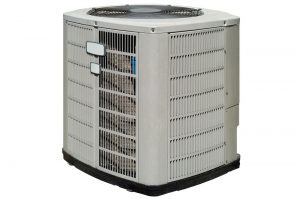
While in other parts of the country, homeowners are getting ready to schedule heating maintenance appointments and turn their sights to fall, we’re still focusing on our air conditioners around here. And perhaps yours isn’t performing up to par and has you considering an upgrade. Whether this describes you or you just want to know more about the intricacies of air conditioners, there’s a term you should know–SEER. And yes, it matters!
Your air conditioner’s SEER rating describes the energy efficiency ratio that applies to all cooling and heat pump systems. You should be able to use this rating to guide your AC choices now and in the future, if you want a truly efficiency and effective air conditioner. Learning what SEER means for AC can make those decisions much clearer.
Read on to learn more about SEER ratings and just why they matter so much.
What SEER Rating Should You Choose for Cooling Replacement?
If you are planning a cooling replacement, the SEER rating helps you compare how efficiently a new AC system turns electricity into cooling. A higher SEER rating usually means better efficiency, lower monthly cooling costs, and stronger long-term value.
When choosing a new AC system, consider:
- The minimum SEER requirement for your area
- Your home’s size and cooling needs
- How often you use your air conditioner
- The upfront cost compared to long-term energy savings
- Whether the system is properly sized and installed
- Guidance from a qualified HVAC professional
Choosing the right SEER rating can help you avoid an inefficient system and get better comfort from your cooling replacement.
What Is a SEER Rating for an Air Conditioner?
SEER stands for seasonal energy efficiency rating, and this is a rating that explains the cooling output of your air conditioner during a typical cooling season divided by the total electric energy input during the same period–in other words, it’s the ratio of energy that is consumed versus the cooling output provided.
If you have an air conditioner that’s consuming a lot of energy but not providing much cooling power, you’ve got a system with a low SEER rating, while if you have a highly efficient, powerful air conditioner, you’re dealing with a high SEER rating.
Why Your AC SEER Rating Matters for Energy Costs
What are the practical applicants of knowing air conditioner SEER ratings, for homeowners? Well, it can be used to give you a guideline when you’re choosing a new air conditioner for installation. If you want a high-efficiency cooling or heat pump system, you’ll want a unit with a high SEER rating. Of course, higher-rated systems are more costly upfront, but what you save in monthly cooling costs more than makes up for this. For deeper buying insight, review smarter SEER rating essentials.
The Department of Energy has specific energy conservation rules that apply to all residential HVAC systems, so when purchasing a new system, you don’t have to worry too much about getting a completely inefficient system. In the state of Florida, it’s required that AC systems at least have a SEER rating of 14.
The reason this all matters is because it makes you an informed consumer when purchasing your next appliance. If an amateur tries to sell you a cheap AC system, for instance, and you find out the SEER rating is below 14, there’s a serious problem and you need to avoid this.
The best way to ensure you’re getting a system with the right SEER rating for your specific household is by working with a trustworthy and experiences professional who really knows their way around various systems and efficiency ratings–and who installs and services top-quality HVAC systems. With an investment as big as your air conditioner, you really don’t want to risk choosing an expert HVAC technician or subpar equipment or subpar work!
Frequently Asked Questions
Question: What does SEER mean on an air conditioner?
Answer: SEER stands for Seasonal Energy Efficiency Ratio. It measures how much cooling an air conditioner provides during a typical cooling season compared with how much electricity it uses. A higher SEER rating usually means the system can provide more efficient cooling and may use less energy.
Question: Does my AC SEER rating really matter?
Answer: Yes, your AC SEER rating matters because it helps you understand how efficient a cooling system is before you buy it. A higher-rated system may cost more upfront, but it can reduce monthly cooling costs and help you choose a better long-term option for your home.
Question: Is a higher SEER rating always better?
Answer: A higher SEER rating usually means better energy efficiency, but it should still fit your home, budget, and cooling needs. The most efficient system is not always the best choice if it is installed poorly or sized incorrectly. Professional guidance helps match the rating to your household.
Question: What SEER rating should an AC have in Florida?
Answer: The page notes that Florida air conditioners are required to meet at least a 14 SEER rating. This minimum helps homeowners avoid very inefficient systems. When comparing replacement options, choosing a system above the minimum may offer better efficiency and lower cooling costs over time.
Question: Can SEER rating help me choose a new air conditioner?
Answer: Yes, SEER rating is a useful guide when comparing new air conditioners or heat pump systems. It shows how efficiently a system converts electricity into cooling. However, it should be considered along with proper sizing, equipment quality, installation work, and help from an experienced HVAC professional.
Contact Kool Breeze of Northwest Florida, Inc. for reliable air conditioning services in Navarre or to learn more about the efficiency ratings of your current HVAC systems!