
If your heating system is nearing the end of its lifespan or struggling to keep up with your comfort needs, it may be time to start exploring your options for a new system—and that begins with choosing the right furnace replacement in Fort Walton Beach, FL.
Today’s high-efficiency furnaces, whether gas or electric, offer a wide range of benefits that can dramatically improve your home’s comfort and energy use. But with so many options available, it’s helpful to understand what sets modern systems apart and how professionals determine the best match for your home.
Choosing the best furnace replacement involves considering factors like energy efficiency, with high AFUE ratings offering lower utility bills, and the condition of your existing ductwork, as older ducts can reduce heating effectiveness. It’s important to evaluate your current system’s repair history since frequent issues may justify investing in a new, more reliable furnace. Consulting an experienced HVAC professional ensures the right size and type of furnace for your home, while modern systems often integrate with cooling solutions for year-round comfort and improved indoor air quality.
How to Choose the Right Furnace Replacement for Your Home
If your current heating system is aging, inefficient, or no longer keeping your home comfortable, choosing the right replacement starts with understanding your home’s needs.
When comparing heating system replacement options, consider:
- The size and heating needs of your home
- Whether gas or electric heating is the better fit
- Energy efficiency ratings and long-term utility costs
- Your home’s insulation, ductwork, and layout
- Available fuel sources and local energy rates
- Your comfort goals, budget, and maintenance preferences
A properly selected heating system can improve comfort, reduce energy waste, and provide dependable performance for years.
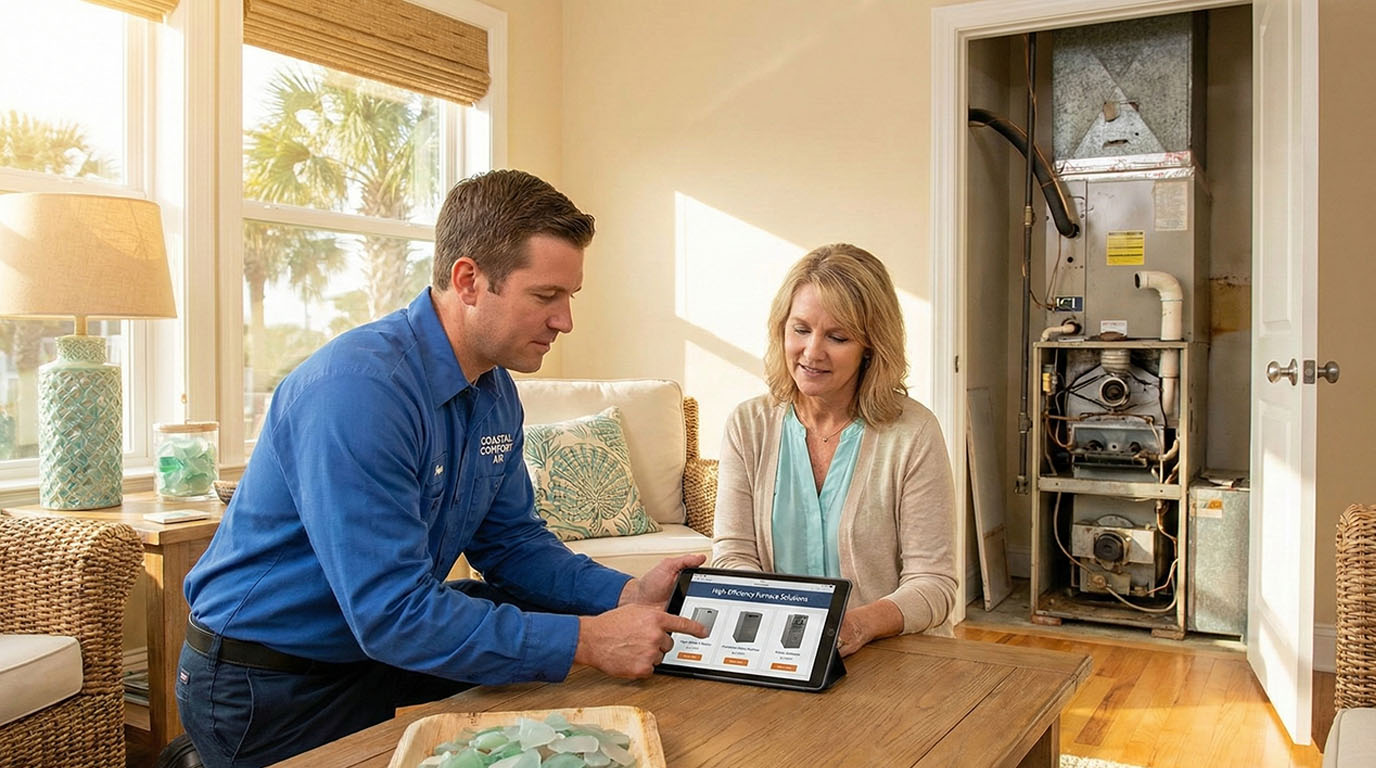
Benefits of Choosing a High-Efficiency Gas Furnace
High-efficiency gas furnaces have come a long way. Modern models often achieve AFUE ratings of 95% or higher, meaning nearly all the fuel they consume is converted into heat for your home. Features such as secondary heat exchangers, sealed combustion, and advanced burners help reduce energy waste and lower your utility bills.
They also provide powerful, consistent heat—a significant benefit if your home needs strong performance during chilly winter nights. For homeowners with access to natural gas, this type of furnace can be a cost-effective and reliable choice. Modern high-efficiency gas furnaces feature variable-speed blowers and modulating gas valves to optimize comfort and energy use. With AFUE ratings often above 95%, they convert most fuel into heat efficiently. Proper installation and ductwork inspection are key to maximizing performance. Upgrading to a new furnace can lower energy bills and reduce repair costs, especially when paired with an AC system for year-round comfort.
When an Electric Furnace Is the Right Replacement Choice
Electric furnaces remain an excellent alternative, especially for homes without natural gas service. They are known for their longevity, straightforward maintenance, and clean, safe operation. Because they rely on electrical resistance heating rather than combustion, they don’t produce emissions and carry no risk of gas leaks or carbon monoxide.
While electric systems can cost more to run in some regions, depending on electricity rates, modern models are designed to improve efficiency and maintain steady heat output. For certain homes, especially smaller spaces or households prioritizing low maintenance, an electric furnace is a great fit. They have fewer moving parts, require less maintenance, and produce no emissions, making them cleaner and safer. Electric furnaces also heat quickly and are easier to install in homes without gas lines. Paired with modern thermostats, they offer precise temperature control and reliable performance, making them a solid heating option where natural gas isn’t available or for those seeking an alternative to older furnaces.
How HVAC Professionals Help You Choose the Right Furnace
Selecting the best home heating system for your home is not a one-size-fits-all decision. Our team takes the time to evaluate several important factors to ensure you receive the most effective and efficient furnace system for your needs. We start with sizing: an improperly sized heater can lead to discomfort, energy waste, and heating problems, and uneven heating can be a sign it is time for a new heating system. Using a Manual J load calculation, we determine the right heating output for your current system needs and the replacement unit you choose. A larger furnace typically costs more to install than a smaller one.
We consider your home’s insulation, ductwork condition, and layout before heating system replacement, inspecting for leaks or sizing issues to ensure efficient warm air delivery and heating performance. Modern HVAC equipment, including variable-speed systems and air source heat pumps with high seasonal energy efficiency ratio and heating seasonal performance factor ratings, improve comfort and lower energy bills, especially in humid climates like Pensacola. Frequent furnace repair or heater repair needs and strange noises often mean replacement makes the most sense, while smart thermostats allow remote control of heating systems. Choosing licensed technicians with proper insurance and positive customer reviews ensures reliable heating installation and service in Pensacola. Our recommendations also factor in fuel availability, utility rates, financing options, and long-term costs to help you select the best heating system for your home.
What to Consider Before Buying a Replacement Furnace
Before investing in a new furnace, it’s important to look beyond the initial price and consider factors that affect long-term comfort, efficiency, and reliability. The size of your home, your heating needs, the system’s energy efficiency rating such as the annual fuel utilization efficiency (AFUE), and the type of furnace that works best for your property can all influence your decision. A professional HVAC technician can evaluate your current heating system replacement needs, inspect your duct work, and recommend a furnace that is properly sized and suited to your home. Choosing the right system from the start can help reduce energy waste, improve indoor comfort, and prevent costly issues down the road. Additionally, considering heat pump maintenance and integrating your heating service with air conditioning and other HVAC systems can provide year-round comfort, especially in the Gulf Coast climate where efficient heating and cooling are essential.
Balance Comfort, Energy Efficiency, and Long-Term Furnace Costs
Replacing your furnace or planning a heater replacement aims to get a system that works for you. Most heaters last 10 to 15 years, with older units needing more service call visits and repairs, especially when the blower motor fails. Newer systems usually require fewer repairs, and a new furnace can fix recurring comfort issues. Modern high-efficiency gas and electric options, including a modern furnace, offer better comfort, lower utility bills, and longer performance. Signs like uneven heating, weak airflow from thermostat problems, and strange noises may indicate worn parts or control issues, often signaling replacement rather than another no-heat call. Working with an experienced HVAC contractor ensures thoughtful heating installation decisions, considering home size, equipment type, and ductwork. Replacement cost depends on these factors. Choose contractors with positive reviews, clear warranties, and who recommend routine maintenance to remove dust, support efficiency, and prevent major heating repairs.
Frequently Asked Questions
Question: How do I choose the best furnace replacement for my home?
Answer: The best furnace replacement depends on your home’s size, layout, insulation, ductwork, fuel availability, utility rates, and long-term comfort goals. A professional load calculation is important because a furnace that is too large or too small can waste energy, cause comfort problems, and lead to more repairs.
Question: Is a gas or electric furnace better for replacement?
Answer: A gas furnace can be a strong choice for homes with natural gas access because it provides powerful, consistent heat and can be cost-effective to run. An electric furnace may be better for homes without gas service, smaller spaces, or homeowners who want simpler maintenance and no combustion-related emissions.
Question: What does furnace efficiency mean?
Answer: Furnace efficiency is often measured by AFUE, which shows how much fuel is converted into usable heat. Modern high-efficiency gas furnaces can have AFUE ratings of 95% or higher. A more efficient furnace can reduce wasted energy, improve comfort, and help lower heating costs over time.
Question: Why does furnace size matter when replacing a heating system?
Answer: Furnace size matters because the system needs to match your home’s actual heating needs. An undersized furnace may struggle to keep the house warm, while an oversized furnace can cycle too often and waste energy. Professionals use load calculations to recommend the right heating capacity.
Question: What should a contractor check before recommending a new furnace?
Answer: A contractor should review more than just the old furnace. Important factors include insulation, ductwork condition, home layout, fuel options, utility costs, and budget. This helps ensure the replacement system fits the home properly and supports reliable comfort, energy efficiency, and long-term performance.
For furnace replacement in Fort Walton Beach, FL, look no further than Kool Breeze of Northwest Florida, Inc. Contact us today!