It’s easy to miss the signs when your air conditioner needs repairs. Even if you notice a few early warnings, you may be tempted to ignore them. A rattle here and there may not sound that bad, but not acting on it is an expensive risk.

Mon-Fri: 7:00 am-5:00 pm
24 Hour Service Available

When you’re looking forward to warmer months, you don’t want to spend time stressing about your air conditioning unit. In humid regions like Florida, summer comes with weather issues like moisture build-up in the ductwork and potential mildew. These don’t have to be stressors, let alone considerations, not with the right HVAC service.
Scheduling professional air conditioning maintenance is the best thing you can do for your system heading into the summer. Don’t just take our word for it, though. Here are 5 benefits of proactively scheduling air conditioning repair in Niceville, FL.

Scheduling a “tune-up” or regular maintenance is an important part of caring for your HVAC unit. To keep yours in the best condition, we advise booking a maintenance service at least once a year, especially before seasonal changes.
In hot, humid regions like Florida, contacting an HVAC professional for a tune-up can prevent the environmental issues AC units are vulnerable to. But what other benefits can you look forward to?
The right air conditioning unit can make an incredible difference to your home, but how do you choose the right one? While it may be winter right now, that doesn’t mean much in Florida’s climate, where we have sweltering summers and winters that would be laughable to our family and friends up north. If you’re considering a new HVAC unit to help keep your home cool, consider a ductless AC unit, also known as a mini split air conditioner. It’s important to choose a mini split air conditioner with the right cooling capacity for your space to ensure effective and efficient cooling.
Ductless mini split systems are revolutionizing home heating and cooling by eliminating the need for extensive ductwork. These systems consist of an indoor unit and an outdoor condenser connected by a pre-charged line set, making installation simpler and less invasive. Indoor units come in various styles, such as wall-mounted or floor console, allowing for targeted comfort in specific rooms or zones. The installation process involves drilling a small hole in an exterior wall to connect refrigerant lines and electrical wiring, ensuring proper airflow and system efficiency.
Proper sizing is crucial when choosing a mini split system, measured in British Thermal Units (BTUs), to avoid inefficiency or excessive cycling. Most systems come pre-charged with refrigerant for up to 25 feet of lineset, but additional refrigerant may be needed for longer runs. The outdoor unit should be placed on a level pad or mounted on a wall with adequate clearance for airflow and protection against environmental factors like corrosion. Electrical connections must comply with local codes, and professional installation is recommended to ensure safety, avoid fines, and maintain warranties.
Ductless mini splits offer energy-efficient, flexible comfort with features like multi-stage filtration and inverter-driven compressors that adjust to real-time demand. They improve indoor air quality by eliminating ductwork allergens and provide superior humidity control. Suitable for homes under 2,000 sq. ft., they can reduce energy bills by 30-50% and offer zoned temperature control for multiple rooms. While upfront costs vary, the long-term savings, quiet operation, and ease of maintenance make ductless mini splits a smart investment for year-round comfort.
A ductless mini split system offers a modern approach to home comfort by combining efficiency, flexibility, and quiet operation in one sleek package. At its core, a mini split system is made up of two main components: the indoor unit (often called the evaporator or air handler) and the outdoor unit (the condenser). These units are connected by a line set, which includes refrigerant lines and electrical wiring, running through a small hole in your exterior wall.
Here’s how it works: When you want to cool your space, the indoor unit draws in warm air from the room and passes it over cold evaporator coils. The refrigerant inside these coils absorbs the heat and carries it outside through the line set to the outdoor condenser unit, where the heat is released. In heating mode, the process reverses—thanks to the mini split heat pump technology, the system extracts heat from the outside air (even in cooler weather) and brings it indoors, providing year-round comfort.
One of the biggest advantages of a ductless mini split system is its energy efficiency. Because there’s no need for ductwork, you avoid the energy losses that can occur in traditional systems—especially in older homes where ducts may be leaky or poorly insulated. This means more of your energy goes directly into cooling or heating your living space, helping to lower your utility bills.
Ductless mini splits are also known for their quiet operation. The indoor unit is designed to run almost silently, making it perfect for bedrooms, home offices, or any area where peace and quiet are a priority. Plus, the compact design of both the indoor and outdoor units means they can be installed in spaces where traditional systems simply won’t fit.
Flexibility is another key benefit. With a mini split system, you can choose to install a single unit for one room or opt for a multi zone system to control the temperature in multiple rooms independently. This zoned approach allows you to customize comfort throughout your home and avoid wasting energy on unused spaces.
When it comes to installation, a ductless mini split is far less invasive than a central air system. The indoor unit is typically mounted high on an interior wall, while the outdoor condenser sits on a level surface outside—often on the north side of the home to avoid direct sunlight. The line set hole is small, minimizing disruption to your home’s structure.
While some handy homeowners may be tempted to install a ductless mini split themselves, proper installation is crucial for optimal performance and safety. Professional installers have the electrical know-how and specialized tools (like a vacuum pump and electrical tape) to ensure everything is connected and sealed correctly, from the copper tubing to the electrical connections and disconnect box.
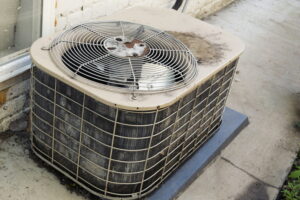
While our friends and family in the midwest and northeast get ready for chillier days by scheduling heating maintenance and making sure their homes are well insulated, we’re still using our air conditioners on a pretty consistent basis.
That’s not to say you shouldn’t invest in heating maintenance too–you should–or that you won’t benefit from proper insulation–you will–but the fact is we have to give extra attention to our cooling systems.
That said, did you notice this past summer and fall that your air conditioner was struggling a bit? Maybe it’s just not keeping you as cool as it used to, or it’s running in short bursts instead of regular cooling cycles (this is called short-cycling). Read on to learn about some signs that it may be time for you to upgrade to a new air conditioner!
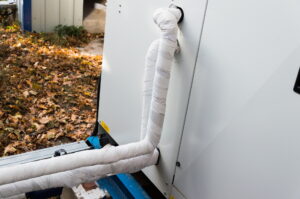
If you’ve been a customer of ours for a while, then you’ve heard us talk about maintenance plenty. Routine annual AC maintenance helps your system work as efficiently and as effectively as possible, for as long as possible.
One of the many AC components that we inspect during your maintenance tune-up, due to the problems that can present with it, is the condensate drain line, which can become clogged. Read on as we uncover what the purpose of the condensate drain is, what can happen when it isn’t functioning properly due to a clog, and what to do about it.

If you’ve lived in Northwest Florida for even just one summer, then you get that humidity is a major concern when it comes to home comfort. Even the mildest of warm days to us can still feel sweltering when the relative humidity level is high enough. This is because the higher the moisture levels in the air, the easier it is for heat to get trapped in the body. Basically, too much humidity makes you feel hotter than it actually is, because you can’t sweat it out!
Humidity creates other problems too. It encourages the development of mold and mildew, as well as other bacteria, and can cause water damage to surfaces. But if you have an air conditioner in your home, you may think that this won’t be a problem–that the air conditioner is a natural dehumidifier.
While this is true–that your forced-air cooling system does have dehumidification properties–it needs a little help. Read on to learn more!

You have several jobs to take care of when you move into a new home. Sign over the utilities, ensure you have homeowners’ insurance, hook up the internet…
Among all this, the last thing you’re probably thinking about is your air conditioner. But, if you’re new to our area, we’ve got news for you—you’re gonna wanna think about your air conditioner. Especially if you’ve never lived in a climate that gets above 75°F in the summer!
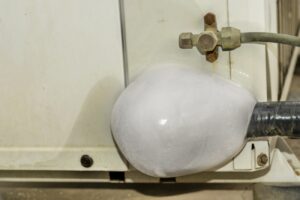
Does your AC look frozen? An icy AC always means there is something wrong with your unit, and the sooner you get the problem resolved, the better. If you ignore the issue, it could grow into a bigger problem–potentially even a complete system breakdown. A frozen AC also uses more energy, and you will eventually see an uptick in your energy bills.
Here we answer some key questions such as, “why does ice appear on an air conditioner?” and “do I need to call a technician for AC repair in Destin, FL to get the problem fixed?”

Your air conditioner is one of the most crucial investments you can make to improve the comfort your home offers. Modern air conditioners are a blessing for homeowners. These units are designed to last 10 to 15 years, offering you and your family living in Florida much-needed respite from the hot weather here. The expected operational lifespan of an air conditioner depends a lot on how well-maintained your unit is.
Like any mechanical device or appliance, an air conditioner must get regular inspections, tune-ups, and maintenance to ensure that it runs optimally and for a long time. Scheduling AC maintenance in Navarre, FL, can make a world of difference in how well your air conditioner performs.
Routine maintenance can ensure that your air conditioner does not develop any major problems. It can also detect any impending repairs before the problems worsen and fix any issues before leading to expensive repairs. But what happens during this service?