

Come out and become a Hunger Hero along others in our community who are walking & running to make a difference! Your paid pre-registration includes a race t-shirt, after party family friendly fun and sponsors a local students weekend meals for a month. All proceeds will benefit the 4 programs administered in our 6 local Navarre area schools.
When: Saturday, March 7, 2020
Time: 7:30am – 10:30am CT
Where: Navarre Beach
Kool Breeze of Northwest Florida, Inc. is proud to sponsor this year’s Hunger Heroes 5K! To learn more and to register, click here.



 With temperatures dipping into the 50’s at night this past week, you might have decided to use your heater. True, we use it very briefly around our area, but given the contrast in temperature, it can be quite chilly at night without a reliable heating system! So, what if you’re using a heat pump, and all it will do is blow out cold air?
 While other parts of the country are scheduling heating maintenance and starting to shut down their air conditioners for the season, we’re still using our cooling systems on a regular basis. That said, this is commonly the time of year that air conditioners begin to experience problems—the reason for this is because it’s been going since last spring.
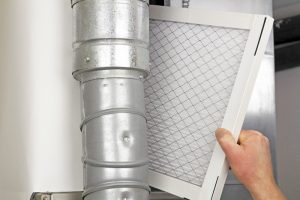 Most homeowners misunderstand the point of the air filter within their HVAC system. They think it is there mainly to protect against allergens and particles in their indoor air. This is partially correct, but not the main purpose nor the reason you should change said filter every 1-3 months.